Park AndJungle
Avery Simms
7 min

Smartwatches are very good at making exercise feel measurable. You finish a workout, look down, and see distance, heart rate, time, steps, and one especially satisfying number: calories burned. The problem is that the calorie number may be much less precise than it looks.
A recent Florida International University study tested four popular watches, the Apple Watch Series 8, Garmin Forerunner 955, Samsung Galaxy Watch5, and Fitbit Sense 2, against a laboratory metabolic analyzer that directly measures energy expenditure from the gases a person breathes. Across 58 adults performing standardized cycling workouts, the watches showed substantial errors in calorie estimates, with typical errors around 15 to 25 percent and much larger discrepancies in some participants.
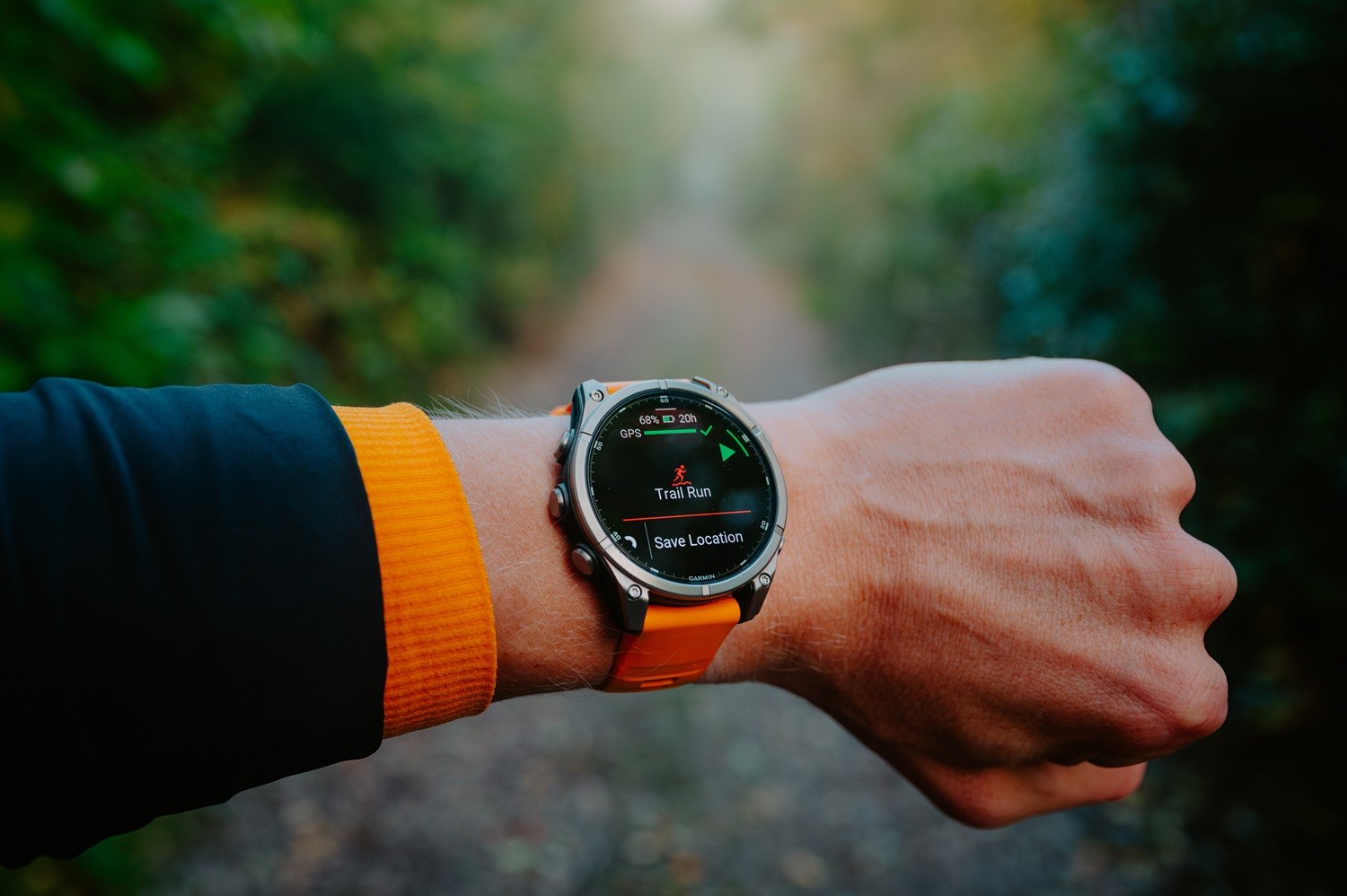
The watches are not actually measuring calories. They are estimating them. Movement sensors and optical heart-rate readings are combined with information such as age, sex, height, and weight, then fed through proprietary algorithms. That works reasonably well for some metrics, but energy expenditure is influenced by considerably more, including body composition, fitness, movement efficiency, and individual physiology.
The most interesting finding was that accuracy declined as body-fat percentage increased. The researchers found this effect across the devices they tested, with some errors reaching 50 to 100 percent or more among participants with higher body-fat percentages. They did not find a significant relationship between skin tone and calorie-estimation error under the conditions of the study.
That matters because calorie burn is often treated differently from the other numbers on a watch. If your step count is slightly wrong, very little changes. But someone trying to lose weight may use a reported 600-calorie workout to justify eating more later, believing the exercise created a larger calorie deficit than it actually did. Lead researcher Jason Kostrna warns that these errors can accumulate over time, potentially turning what someone believes is a deficit into maintenance or even a surplus.
None of this makes the smartwatch useless. Heart rate, distance, pace, workout duration, and long-term trends can still provide useful feedback. The better approach is to treat calorie expenditure as an estimate rather than an accounting statement. A watch can tell you that one workout was probably more demanding than another. It cannot reliably tell you that you have earned exactly 487 calories of food.
The larger lesson may apply to the rest of the quantified-health movement as well. Wearables increasingly present complicated physiological estimates as clean numbers, sometimes down to a single point. That precision can create confidence the underlying measurement does not deserve.
So if your watch tells you that you burned 700 calories during a hard workout, there is no need to ignore it completely. Just do not mistake a useful estimate for a laboratory measurement. The most valuable thing the watch may tell you is still much simpler: you moved today.
Park AndJungle
Want to join the conversation?
The products, observations, and ideas we publish are informed by hundreds of hours spent talking with clients each year. If you'd like us to share your brand with our community, we'd love to learn more about what you're building.

atlas

1hr



field
8hr

cure
6hr

uninterrupted
6hr

bevel
7hr