Park AndJungle
Avery Simms
5 min

The New Balance 2010 was introduced as a modern versioning of the brand’s early-2000s running language. The Whitaker Group’s latest version is a reinterpretation of this classic.
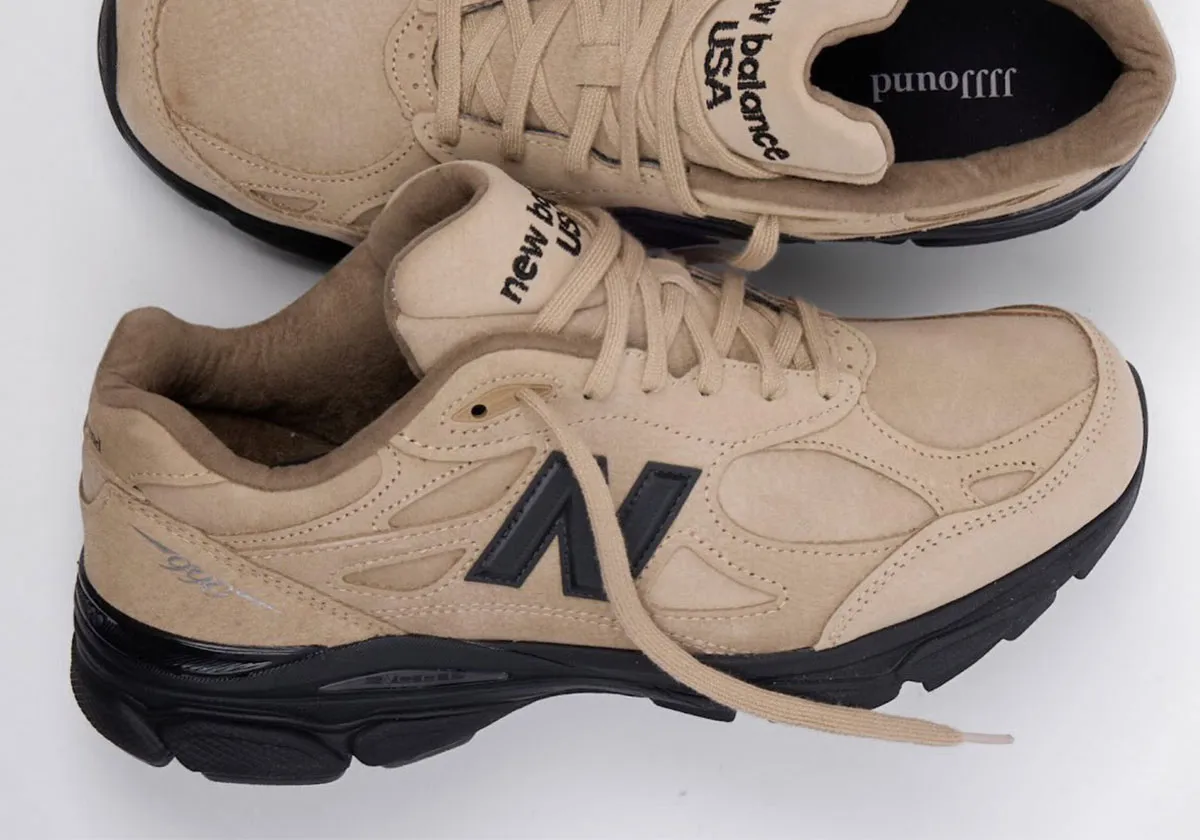
The New Balance 2010 already sits in an interesting place. Introduced as a modern interpretation of the brand’s early-2000s running language, it combines a familiar mesh-and-overlay upper with an exaggerated ABZORB sole and enlarged cushioning pods at the heel. The Whitaker Group’s latest version does not radically redesign that formula. Instead, it changes how the shoe feels through material, replacing some of the expected technical finishes with steel-grey leather carrying an ostrich-like texture.
That material choice does most of the work. Light beige mesh covers much of the upper and tongue, while grey “N” branding and a matching beige midsole keep the palette restrained. Purple appears sparingly on the tongue tag and ABZORB heel pods. The result is still recognizably a performance-derived New Balance runner, but the textured leather gives it the visual language of something considerably more formal and expensive.
That tension is becoming increasingly useful in sneakers. The most interesting lifestyle runners are no longer trying to hide their technical origins, nor are they simply dressing old performance shoes in louder colorways. They are allowing cushioning systems, mesh, plastic and exaggerated soles to coexist with materials once associated with dress shoes, handbags and luxury accessories. The Whitaker Group’s 2010 works because neither side completely wins. It still looks comfortable enough to wear every day, but considered enough that comfort does not become the entire personality.
The price reinforces that idea. The “Ostrich” 2010 is scheduled to release September 25 for $155, actually placing it around the normal retail territory of the silhouette rather than turning the material treatment into a luxury-priced collaboration. That makes the collaboration less about exclusivity than perception. A relatively small material change can make a familiar sneaker feel more deliberate without requiring the wearer to cross into a completely different price category.
That may be the more interesting lesson in the shoe. As sneaker design settles into an era where comfort is expected, differentiation increasingly comes from texture, proportion and restraint rather than novelty for its own sake. The Whitaker Group did not need to reinvent the 2010. It simply found the part of the shoe where one change could make the whole thing feel richer.
Park AndJungle
Want to join the conversation?
The products, observations, and ideas we publish are informed by hundreds of hours spent talking with clients each year. If you'd like us to share your brand with our community, we'd love to learn more about what you're building.

atlas

1hr



field
8hr

cure
6hr

uninterrupted
6hr

bevel
7hr