Park AndJungle
Tyler
10 min
Press Esc to close

Shiftwave promises something increasingly attractive in modern wellness: a faster way to come down from stress. The question is whether the experience is valuable enough to justify the price.
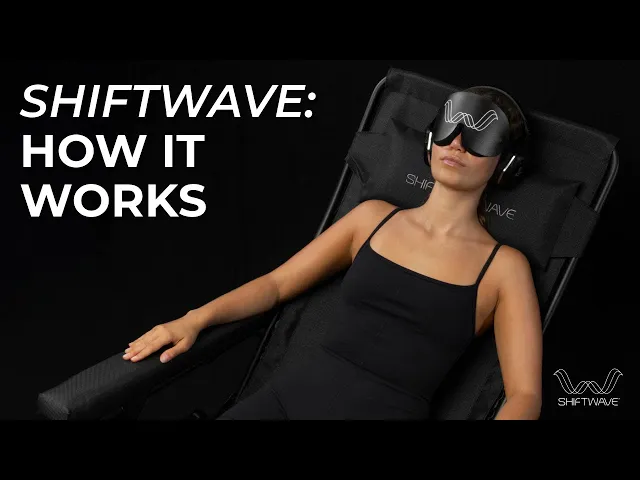
There is no shortage of products willing to tell you how stressed you are. Watches track sleep, rings calculate readiness, and apps turn recovery into another score to improve. Shiftwave takes almost the opposite approach. Its $9,950 Shiftwave Pro is a reclining chair that combines patterned physical vibration, guided breathing, audio, and sensory isolation through headphones and an eye mask. Users choose from more than 70 protocols built around states such as relaxation, focus, recovery, and preparation for sleep. Instead of measuring whether your nervous system has settled down, the product is designed to help you actually do it.
That distinction helps explain why Shiftwave has found an audience among professional athletes, first responders, performance facilities, and wellness practitioners. Sitting down, closing your eyes, and following a breathing exercise is free, but anyone who has tried meditation after a difficult day knows that simple does not always mean easy. Shiftwave adds a physical rhythm to the experience. The chair's pressure waves move through different parts of the body while audio guides breathing and attention, effectively giving the user something tangible to follow. Its appeal may have less to do with inventing a new biological pathway than with making familiar practices such as breathwork, sensory reduction, and deliberate rest considerably easier to enter.
The early research is interesting, but it is not yet strong enough to make the purchasing decision on science alone. Shiftwave lists real-world evaluations involving firefighters, police officers, and NCAA Division I athletes, with participants reporting improvements in measures including perceived stress, anxiety, recovery, and mental readiness after sessions. The company is unusually clear about the limitation: these studies were sponsored by Shiftwave, have not undergone independent peer review, and should be considered preliminary and exploratory. Controlled research is still underway. Shiftwave also describes itself as a general wellness product rather than a treatment for a medical condition. FDA guidance similarly distinguishes low-risk general wellness products from devices whose safety and effectiveness have been evaluated for treating or diagnosing disease.
That makes the $9,950 price difficult to justify for the average household. The underlying goals Shiftwave addresses, including slowing your breathing, reducing stimulation, relaxing the body, and creating a deliberate transition between periods of stress and rest, can be pursued much more cheaply. What nearly $10,000 buys is not exclusive access to relaxation. It buys compliance. The chair removes decisions, creates an immersive environment, guides the process from beginning to end, and may make someone considerably more likely to spend 10 or 20 minutes actually recovering instead of opening another app or continuing to work. For an athlete whose performance depends on recovery, a clinician using it with dozens of clients, or someone with substantial disposable income who already knows the experience works for them, that convenience could carry real value. For someone who has not yet established the basics of sleep, exercise, nutrition, movement, and stress management, it is difficult to argue that Shiftwave should be the next $10,000 spent.
That does not make Shiftwave snake oil, nor does the lack of mature independent research mean the experience is meaningless. There is an important middle ground in wellness between a clinically proven treatment and something a person simply finds restorative. Shiftwave appears to occupy it. The company offers a 30-day return window, excluding shipping, and prospective buyers would be better served by trying the system before treating testimonials from professional athletes as evidence that it belongs in their own home.
For the average consumer, then, the more useful question is not “Does Shiftwave work?” It is “What problem am I spending $10,000 to solve?” If the answer is that you need a reliable way to stop, breathe, and transition out of a demanding day, Shiftwave may be one of the most sophisticated ways to create that experience. But sophistication and necessity are not the same thing. For most people, the better first investment is probably learning whether the inexpensive version of that habit works before buying the chair that makes it effortless.
Press Esc to close
Park AndJungle
Want to join the conversation?
The products, observations, and ideas we publish are informed by hundreds of hours spent talking with clients each year. If you'd like us to share your brand with our community, we'd love to learn more about what you're building.

atlas

1hr



field
8hr

cure
6hr

uninterrupted
6hr

bevel
7hr