Park AndJungle
Tyler
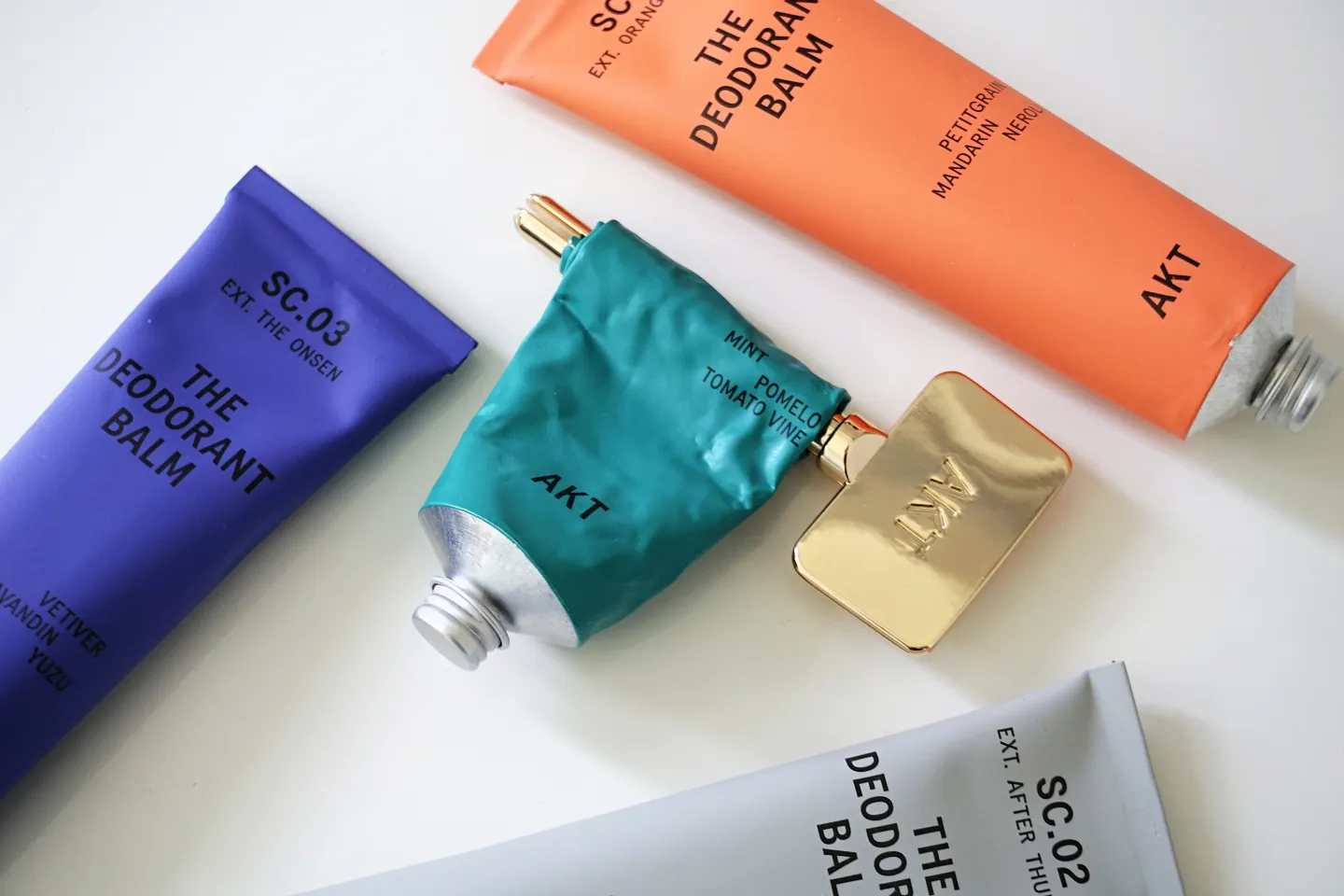
The category used to have one job. Now brands like AKT London are turning deodorant into something closer to skincare, fragrance and a full-body ritual.
For most of its modern history, deodorant has been an invisible utility. You put it under your arms, hoped it worked, and rarely thought about it again. The category was organized around prevention: prevent odor, prevent sweat, prevent embarrassment. But deodorant is starting to behave differently. Whole-body formats are expanding where the product can be used, skincare ingredients are changing how it feels, and fragrance is giving consumers a reason to actually enjoy applying it. This is happening alongside a broader change in body care. Vogue noted this year that ingredients and rituals once reserved for facial skincare are increasingly moving below the neck, while fragrance layering is turning washes, oils and mists into parts of the same scent routine.
AKT London is one of the clearest examples of where that shift can lead. The brand's hero product is not a conventional stick or aerosol, but a $29 deodorant balm applied by hand. It starts as a skin-nourishing balm and dries into an invisible powder, and AKT positions it for use beyond the underarms, including the chest and feet. The formula contains ingredients more familiar from skincare and body care, including sunflower seed oil, apricot kernel oil, shea butter and calendula. It is also aluminum-salts-free, which is an important distinction: it is designed to deodorize and absorb perspiration rather than function as an antiperspirant that blocks sweat.
What makes AKT particularly interesting, though, is what happened around the deodorant. The company now sells body wash concentrate, body conditioning balm, body oil and deodorizing body mist alongside a growing wardrobe of deodorant scents. Sephora currently lists 16 AKT products, while the brand's own assortment allows customers to move scents such as Orange Grove and Santal Nomad across multiple steps of a body routine. Deodorant becomes the entry point, but the larger proposition is increasingly about how your body smells, feels and is cared for throughout the day.
That reflects something happening beyond AKT. Whole-body deodorants have become prominent enough that the American Academy of Dermatology now publishes consumer guidance explaining where they can and cannot be useful. The distinction matters because deodorant and antiperspirant are not interchangeable, and putting fragrance everywhere on the body is not automatically beneficial. But the consumer behavior underneath the trend is meaningful. Industry research published this summer found growing interest in deodorant beyond the underarms, particularly among younger consumers, with scent increasingly connecting hygiene to beauty and self-care. The category is no longer competing only on hours of protection. It is competing on texture, ingredients, packaging, fragrance and how naturally the product fits into someone's routine. (American Academy of Dermatology)
For men, that evolution may be particularly important. A complicated ten-step body-care routine is unlikely to become universal, but deodorant already has something skincare brands spend millions trying to create: an established daily habit. If one familiar product can gradually introduce better formulations, intentional fragrance and care for skin beyond the face, deodorant becomes an unusually powerful gateway into grooming. AKT's real contribution may not be convincing people to think harder about deodorant. It may be showing that the most ordinary product in the bathroom can quietly become the beginning of an entire body-care routine.
Park AndJungle
Want to join the conversation?
The products, observations, and ideas we publish are informed by hundreds of hours spent talking with clients each year. If you'd like us to share your brand with our community, we'd love to learn more about what you're building.

atlas

1hr



field
8hr

cure
6hr

uninterrupted
6hr

bevel
7hr