Park AndJungle
Tyler
5 min
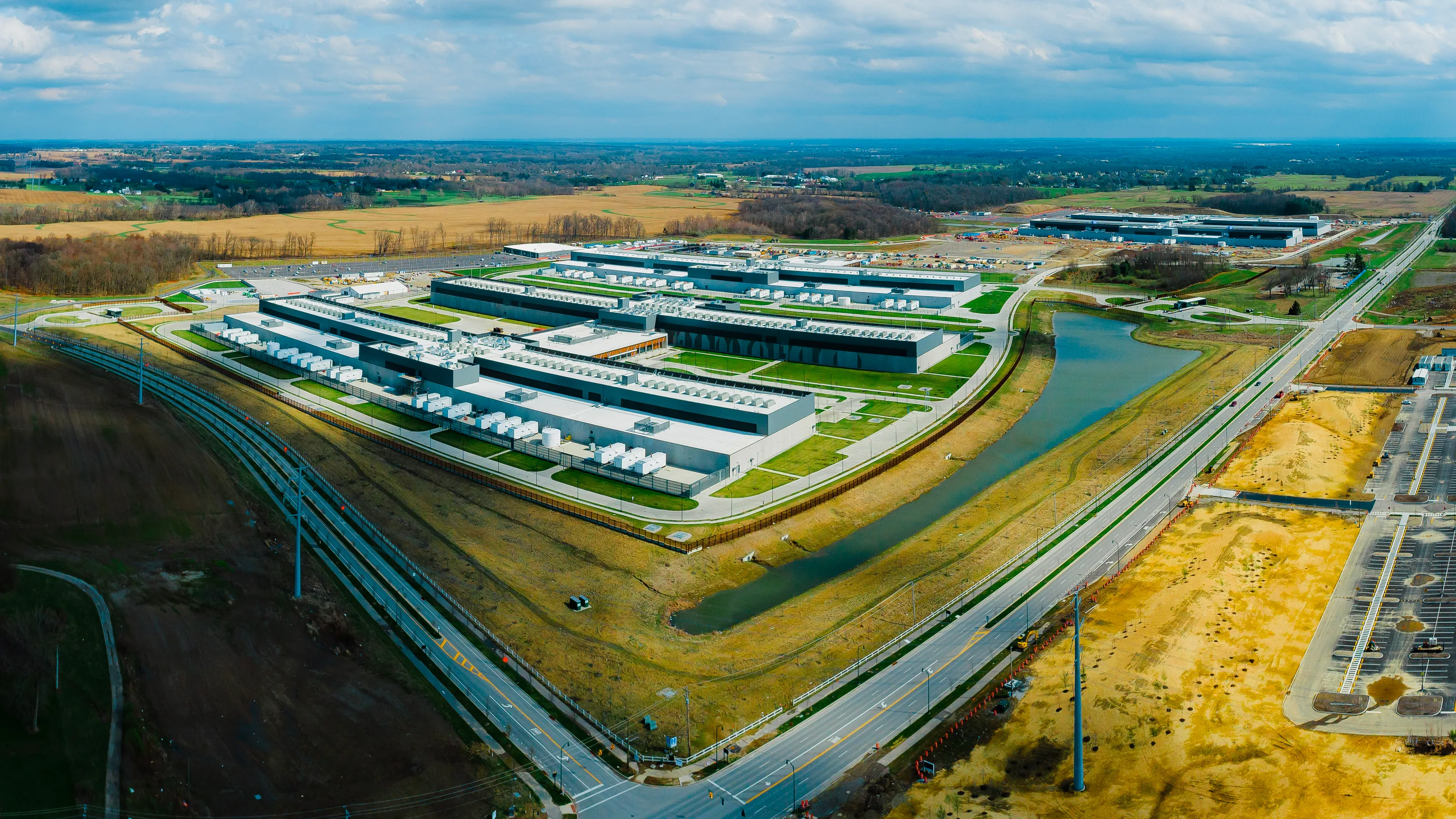
Silicon Valley emerged because software companies clustered around talent. Columbus is attracting something different. The region is becoming infrastructure—physical infrastructure for artificial intelligence. That's a less glamorous story, but historically, infrastructure is where economic shifts begin.
People keep asking whether Columbus is becoming the next Austin or Silicon Valley.
It's the wrong question.
Silicon Valley emerged because software companies clustered around talent. Columbus is attracting something different. The region is becoming infrastructure—physical infrastructure for artificial intelligence. That's a less glamorous story, but historically, infrastructure is where economic shifts begin.
Drive east of downtown toward New Albany and the landscape starts to explain itself. Warehouses give way to construction sites. Power substations appear where cornfields used to be. Roads widen. Industrial parks stretch toward the horizon. Amazon, Google, Meta, Microsoft, Intel, and a growing list of developers have committed tens of billions of dollars to central Ohio, not because it's fashionable, but because it solves practical problems: land is available, electricity is comparatively accessible, the climate reduces cooling costs, and the Midwest sits close to a large share of the U.S. population.
Most people see data centers and assume they're looking at warehouses with servers inside.
They're looking at the foundation of the next economy.
History suggests these moments follow a familiar sequence. Railroads reshaped Chicago. Oil transformed Houston. Semiconductors turned Santa Clara Valley into Silicon Valley. Seattle didn't become Seattle because people suddenly decided they liked coffee and software. It became Seattle because companies built the infrastructure that attracted talent, suppliers, investors, and eventually entirely new industries.
Infrastructure has a way of pulling everything else behind it.
The mistake many entrepreneurs make is assuming opportunity exists only inside the companies writing the biggest checks.
It rarely does.
The most interesting businesses created during an economic shift are often adjacent to it.
When technology transformed San Francisco, it wasn't just software companies that won. Recruiting firms emerged. Commercial photographers built careers documenting startups. Boutique law firms specialized in venture-backed companies. Coffee shops became meeting places. Coworking spaces became businesses of their own. Entire industries formed around people who never wrote a line of code.
Central Ohio feels closer to that stage than many people realize.
The practical question isn't whether you should learn to build foundation models.
It's whether your business becomes more valuable in a city increasingly populated by engineers, contractors, executives, suppliers, and companies building the infrastructure behind AI.
For some businesses, that means serving construction and logistics. For others, it means corporate wellness, relocation services, housing, executive transportation, specialty food, hospitality, media, or professional services. The opportunity isn't to chase artificial intelligence. It's to recognize who artificial intelligence is quietly bringing with it.
There's another group that should probably pay closer attention.
Entrepreneurs still treating AI as a novelty.
Not because they'll be replaced tomorrow, but because the competitive gap is already opening. The difference between a business using AI to eliminate repetitive work and one ignoring it entirely compounds every week. Customer support, marketing, operations, scheduling, research, sales…none of these functions look the same as they did even two years ago.
Economic shifts don't announce themselves with a starting gun.
They accumulate until one day they're obvious.
By then, the people who benefited most have usually stopped calling it an opportunity. They simply call it where they built their business.
Park AndJungle
Want to join the conversation?
The products, observations, and ideas we publish are informed by hundreds of hours spent talking with clients each year. If you'd like us to share your brand with our community, we'd love to learn more about what you're building.

atlas

1hr



field
8hr

cure
6hr

uninterrupted
6hr

bevel
7hr